
Based on Ephesians 5:15-16 — “Be very careful, then, how you live — not as unwise but as wise, making the most of every opportunity, because the days are evil.”
Most people do not choose how they live. They react to it.
The alarm goes off. The phone demands attention. The day’s obligations assert themselves in a cascade of urgency that has been building since yesterday and will continue building until something finally gives. By the time the evening arrives and the noise subsides, there is the quiet, nagging sense that another day has passed — full of activity, short on meaning, somehow both exhausting and empty.
This is not a modern problem. It is a human problem. And Paul addresses it in Ephesians 5 with an urgency that suggests he understood it clearly.
Be very careful how you live. The Greek is blepete oun akribōs pōs peripatēte — look carefully, with precision, with attention, at how you are walking. Not just where you are going but how — the quality, the intentionality, the moment-by-moment attentiveness with which you are moving through your actual daily life.
Because days are not neutral. Time is not an infinite resource that can be spent carelessly and recovered later. Every day is a specific, unrepeatable, God-given opportunity — and Paul says, with characteristic directness, that the wise person makes the most of every one.
The gap between your values and your schedule is one of the most honest diagnostic tools available for assessing the actual condition of your spiritual life.
What you say you value — God, family, genuine community, spiritual formation, mission — and what your calendar actually reflects you spending your time on, these two lists are often remarkably different. And the difference is not primarily a character failure. It is a formation failure — the failure to intentionally build a life whose architecture reflects its own deepest convictions.
Most of us inherited our daily structure rather than designed it. We drifted into our current routines through the accumulated momentum of obligations, expectations, habits formed years ago, and the default settings of the culture we inhabit. We did not sit down and ask: Given who God has made me, given what He has called me to, given what I most deeply believe about what a human life is for — what should my days actually look like?
That question — asked honestly, answered carefully, and acted on consistently — is one of the most transformative things you can do.
Bob Hamp argues that intentional living is not primarily a productivity strategy — it is a theological statement.
“How you spend your time,” he writes, “is one of the most concrete expressions of what you actually believe about God, about yourself, and about what your life is for. A person who believes they are a new creation, called and sent by God, living from the inside out — that person’s daily life will look different from a person who has not yet integrated those truths at the level of daily practice. Intentional living is simply the practical expression of a theology that has gone all the way down — from belief to behavior, from conviction to calendar” (Think Differently, Live Differently, p. 363, Bob Hamp).
From conviction to calendar.
That phrase captures exactly what the Lifechoicely framework is designed to facilitate — the translation of your deepest spiritual convictions into the concrete, daily, practical architecture of how you actually live. Not just believing that you are a sent person but scheduling your days in a way that reflects that sending. Not just valuing community but making specific, regular, non-negotiable space for the genuine shared life that community requires.
Graham Cooke describes intentional living as the practice of what he calls “living from the future into the present.”
Rather than being driven by the urgency and demands of the present moment — reactive, pressure-managed, pulled in whatever direction the loudest obligation points — the intentional believer learns to live from a clear picture of who God has called them to be and what He has called them to build. They let that future vision pull them forward, shaping their present choices, orienting their daily decisions around what serves the calling rather than what simply demands immediate attention.
“The person who lives intentionally,” Cooke writes, “is not the person who is most disciplined in a self-improvement sense. They are the person who has the clearest picture of where God is taking them — and who has learned to let that picture govern their present choices rather than letting their present circumstances govern their future possibilities. Intentional living is future-oriented living, anchored in the present by specific, concrete, daily choices that serve the calling God has already prepared” (Radical Perceptions, p. 103, Graham Cooke).
Letting the calling govern the choices rather than the circumstances.
That is the inside-out logic applied to time management. Not organizing your life around what is loudest or most urgent. Organizing it around what is most true — about who you are, where you are going, and what God has prepared for you to do in the specific season you are currently in.
John Eldredge frames intentional living in terms of the larger story that gives meaning to every smaller daily choice.
“A person who knows they are living inside a great story,” he writes, “makes different daily choices than a person who is simply managing a life. Because when you know that the story is real — that God is the Author, that your role in it is specific and irreplaceable, that the choices you make today are actual plot developments in a narrative that has eternal stakes — then even the ordinary daily choices take on a weight and a significance that transforms the experience of living them” (Epic, p. 117, John Eldredge).
Ordinary daily choices as actual plot developments in an eternal story.
That reframe changes everything about the experience of intentional living. It is not discipline for discipline’s sake — not a self-improvement project undertaken out of vague conviction that you should be better organized. It is the stewardship of a story that matters — the careful, attentive, Spirit-led management of the time and energy and opportunity that God has given you to play your specific, irreplaceable part in what He is doing in the world.
Frank Viola grounds intentional living in the lordship of Christ.
If Christ is genuinely Lord — not just theologically but practically, not just on Sunday but on Tuesday, not just in the designated spiritual areas of life but in every area — then every domain of life comes under His direction. The calendar. The finances. The relationships. The career decisions. The use of the evening hours. The way the morning begins.
“The lordship of Christ,” Viola writes, “is not a theological category — it is a practical reality that either governs your daily life or it does not. And the most honest test of whether Christ is genuinely Lord is not what you believe about Him but how you spend your time. A life genuinely surrendered to the headship of Christ is a life that looks intentional — not because the person is naturally disciplined, but because the Person who is directing their life has specific purposes that shape specific choices” (48 Laws of Spiritual Power, p. 44, Frank Viola).
The Person directing the life shapes the specific choices.
That is the foundation of intentional living in the Lifechoicely framework. Not self-generated discipline. Spirit-led alignment — the ongoing, daily, practical submission of your schedule, your
energy, and your choices to the lordship of a Christ who has specific purposes for the specific season you are currently in.
In the years since Lois and I returned to Michigan, intentional living has taken on a very specific and personal shape for us.
We have had to ask — honestly, sometimes uncomfortably — whether the structure of our daily life reflects what we most deeply believe. Whether the time we spend serves the calling we carry. Whether the energy we invest in the things that demand our attention is proportional to the significance of those things in the larger story God is writing through us.
Those questions have produced some significant recalibrations.
The decision to stop attending institutional church and begin hosting home fellowship was, in part, an intentional living decision — a recognition that the Sunday morning investment was not producing the quality of genuine community and genuine formation that we believed was possible, and that a different structure would serve the calling more faithfully.
The commitment to the Lk10 community — the time invested in training, in shared discernment, in the particular vision of vibrant families of Jesus within reach of everyone — was an intentional alignment of our schedule with our deepest conviction about what the kingdom looks like and how it grows.
None of these decisions were easy. Intentional living almost never is — because it requires saying no to things that are not bad, in order to say yes to things that are better. It requires the willingness to disappoint the expectations of people who have a different picture of what your life should look like, in order to remain faithful to the picture God has been showing you.
But the fruit of that intentionality — the quality of community, the depth of formation, the sense of genuine alignment between who we are and how we live — is worth every uncomfortable recalibration.
Here is the practical invitation of this article:
Audit your calendar against your values. Not as a guilt exercise — as a formation exercise. Take your five most deeply held convictions about what your life is for and what God has called you to, and hold them up against how your time was actually spent last week.
Where is the alignment? Where is the gap?
Then make one specific, concrete change — not twenty changes, one — that moves your daily life one step closer to the intentional architecture that your deepest convictions require. Do that one thing for thirty days. Then make another change. And another.
Slowly, consistently, one intentional recalibration at a time — your daily life will begin to reflect the inside-out truth of who you are and what you have been called to. Not perfectly. Not all at once. But genuinely, progressively, in the direction of a life that looks from the outside like what is most true on the inside.
TAKEAWAY LESSON:
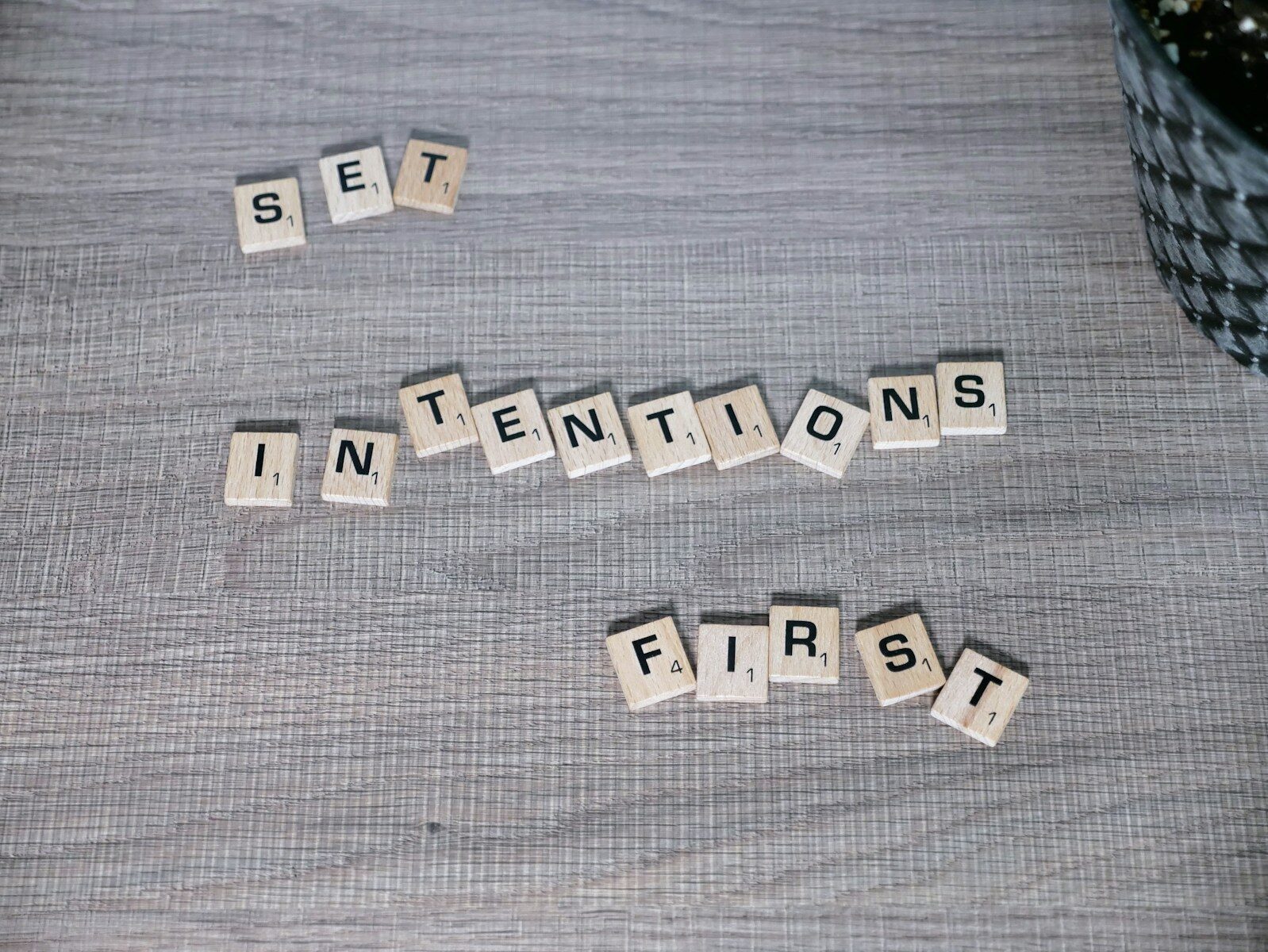
Intentional living is not a productivity strategy — it is a theological statement. How you spend your time is the most concrete expression of what you actually believe about God, yourself, and what your life is for. Audit your calendar against your calling. Close the gap. One recalibration at a time.
Values-to-Calendar Audit: Write down your five deepest values or convictions about what your life is for. Then review last week’s calendar honestly. For each value, ask: “Did my time last week reflect this conviction?” Identify the single biggest gap. Make one specific, concrete change this week to close it. Repeat monthly.
— Ed Baulete Lifechoicely.com
More From This Category
Everything We Have Been Building Toward — A Summary, a Framework, and an Invitation to Go Deeper
Based on Colossians 1:27-28 — "Christ in you, the hope of glory. He is the one we proclaim, admonishing and teaching everyone with all wisdom, so...
A Final Word — To the Hungry Believer Who Is Still Saying “I Wanna Know More
Based on Matthew 5:6 — "Blessed are those who hunger and thirst for righteousness, for they will be filled." If you have read every article in...