
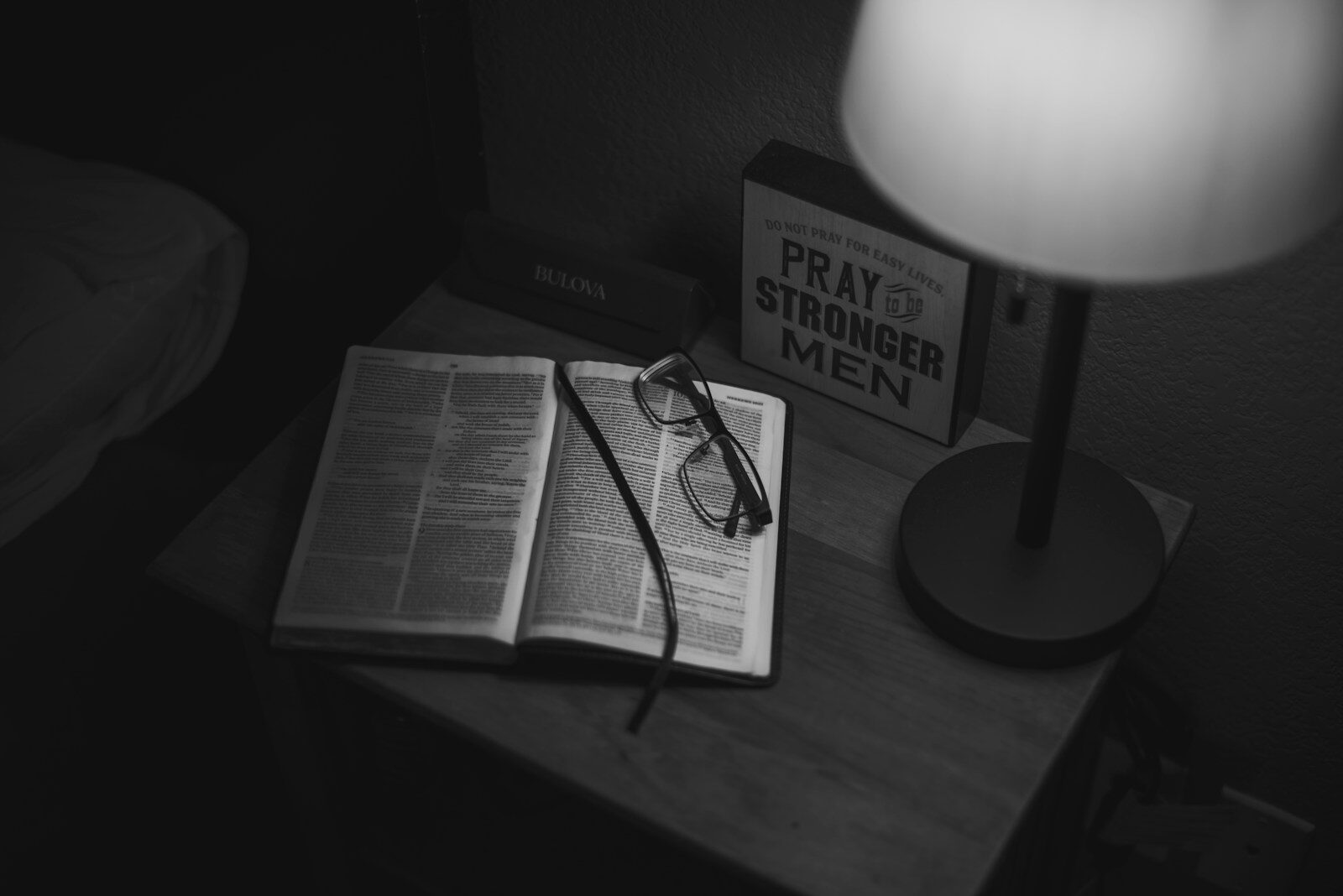
Based on 1 Timothy 4:7-8 — “Train yourself to be godly. For physical training is of some value, but godliness has value for all things.”
I spent years treating spiritual disciplines the way a performance-anxious student treats homework — as obligations to complete, boxes to check, evidence of seriousness to accumulate.
Bible reading at 6 a.m. Check. Prayer for thirty minutes. Check. Fasting on Fridays. Check. Worship music during the commute. Check.
The disciplines were real. The consistency was genuine. But something about the whole enterprise felt subtly off — like I was maintaining a religious fitness routine rather than cultivating a living relationship. I was disciplined, but I wasn’t necessarily transformed. I was consistent, but I wasn’t necessarily encountering God.
It took me an embarrassingly long time to identify the problem.
I had confused the door with the destination.
Paul’s instruction to Timothy in 1 Timothy 4:7 uses the Greek word gymnazō — the root of our word gymnasium.
Train yourself. Discipline yourself. Exercise yourself toward godliness. The athletic metaphor is intentional and instructive — Paul is describing a real, rigorous, consistent practice. He is not dismissing discipline or spiritualizing it into a vague posture of openness. He is talking about intentional, regular, repeated activity aimed at a specific outcome.
But the outcome he has in mind is not the discipline itself. It is godliness — eusebeia in Greek — which carries the meaning of a life shaped by genuine reverence, genuine intimacy, genuine orientation toward God. The discipline is the training method. Godliness — transformed character, deepened intimacy, Christ-formed identity — is the goal.
You can be extraordinarily disciplined and still miss godliness entirely, if you have confused the method with the outcome.
Dallas Willard, whose thinking deeply influenced Bob Hamp and much of the Christian formation movement, drew a distinction that I wish someone had handed me at the beginning of my faith journey:
Spiritual disciplines are not the same as spiritual effort. You cannot become like Christ by trying very hard to be like Christ in the moment of temptation or challenge. You become like Christ by training in advance — by regularly practicing the activities that create the internal conditions in which Christ’s life can naturally emerge.
Hamp builds on this foundation: “The purpose of any spiritual practice is not the practice itself — it is the opening it creates. Bible reading opens you to encounter the living Word. Prayer opens you to conversation with the living God. Fasting opens you to dependence on the living Spirit. The practice is the door. What matters is what you find on the other side of it” (Think Differently, Live Differently, p. 159, Bob Hamp).
The door. What matters is what you find on the other side.
That reframe changed everything about how I approached my own formation practices.
When I was leading the house church gatherings in the Philippines — first in my own home and then rotating between the homes of various believers — I noticed something consistently.
The people who were most transformed over time were not necessarily the most disciplined in the conventional sense. They were the most present. The most genuinely open. The most willing to bring their real selves — their doubts, their questions, their failures — into their time with God and with each other.
Meanwhile, some of the most religiously consistent people I knew were also among the most stuck. They maintained their disciplines with impressive regularity but seemed to move through them on autopilot — completing them without truly entering them. Their quiet times were thorough but not penetrating. Their prayers were articulate but not intimate.
They had mastered the door. But they weren’t actually walking through it.
Graham Cooke describes the inner quality that transforms discipline from religious duty into genuine formation:
“The discipline is the container,” he writes. “But what fills the container is expectation — the alive, childlike, genuinely believing expectation that God will show up, will speak, will move, will be encountered. Without expectation, the most rigorous spiritual practice is just religion. With it, even the simplest act of turning toward God becomes an encounter” (Approaching the Heart of Prophecy, p. 38, Graham Cooke).
Expectation. That quiet, posture-level conviction that the God you are turning toward is genuinely, personally, specifically interested in meeting you in this moment.
That is what I was missing in my checklist-driven discipline years. I was consistent, but I wasn’t expectant. I was present in body but not in anticipation. I was doing the right things with a heart that had quietly stopped believing they would produce an actual encounter.
John Eldredge brings a dimension to this that I find both liberating and clarifying.
He argues that the spiritual life should feel like an adventure — like genuine, two-way engagement with a living, personal, surprising God — rather than a maintenance routine. “Religion,” he writes, “gives you a program to follow. Jesus gives you a Person to follow. And persons are far less predictable than programs — but they are also far more alive” (Waking the Dead, p. 61, John Eldredge).
Far less predictable but far more alive.
That is the quality that disciplines are meant to protect and cultivate — not a tidy, manageable, predictable devotional routine, but the wild, alive, genuinely relational experience of walking with Jesus through actual daily life.
Frank Viola adds the crucial correction that the disciplines were never meant to be practiced in isolation.
The New Testament model of formation, he argues, is fundamentally communal. The early believers did not each retreat to their private quiet time and then reconvene for a weekend service. Their formation practices were woven into the fabric of shared life — eating together, praying together, studying together, suffering together, celebrating together. The disciplines functioned as the rhythm of a community, not just the routine of individuals.
“Spiritual formation in the New Testament,” Viola writes, “is not a solo project. It is what happens to people who are living in genuine, Christ-centered, mutually accountable community — people who are being formed by the Head together, not just individually” (Reimagining Church, p. 132, Frank Viola).
This is why the Lk10 community has been so significant for Lois and me. It is not just a network of like-minded believers. It is a community of formation — people who practice the disciplines of listening, discernment, prayer, and mutual accountability together, in the context of genuine relationship, under the shared conviction that God is always already at work ahead of them.
So let me give you the Lifechoicely perspective on spiritual disciplines, plainly stated:
Do them. Do them consistently. Do them with real effort and genuine commitment — because the body and the mind are not automatically oriented toward God, and they require regular, intentional reorientation.
But do them as doors, not destinations. Do them with expectation, not just obligation. Do them in community wherever possible, not just in isolation. And do them with the primary question being not “Did I complete my discipline today?” but “Did I encounter God through my discipline today?”
Because the God you are turning toward in those practices is not a passive recipient of your religious effort. He is an active, prevenient, always-already-present Person who is moving toward you with at least as much intentionality as you are bringing to the practice.
The door swings both ways. Push it open — and don’t be surprised by what comes through.
TAKEAWAY LESSON:
Spiritual disciplines are not the goal of the Christian life — they are the training ground for it. Practice them consistently, but practice them with expectation. The point is never the discipline itself. The point is the God you find when you walk through the door it opens.
Formation Audit: Look at your current spiritual practices. For each one, ask honestly: “Am I walking through this door, or just standing at it?” Pick one practice this week and do it differently — slower, more expectantly, with a journal open to capture what God says. Then notice the difference.
— Ed Baulete Lifechoicely.com

More From This Category
Everything We Have Been Building Toward — A Summary, a Framework, and an Invitation to Go Deeper
Based on Colossians 1:27-28 — "Christ in you, the hope of glory. He is the one we proclaim, admonishing and teaching everyone with all wisdom, so that we may present everyone fully mature in Christ." Something has been happening in these pages. If you have been...
Everything We Have Been Building Toward — A Summary, a Framework, and an Invitation to Go Deeper
Based on Colossians 1:27-28 — "Christ in you, the hope of glory. He is the one we proclaim, admonishing and teaching everyone with all wisdom, so that we may present everyone fully mature in Christ." Something has been happening in these pages. If you have been...
Everything We Have Been Building Toward — A Summary, a Framework, and an Invitation to Go Deeper
Based on Colossians 1:27-28 — "Christ in you, the hope of glory. He is the one we proclaim, admonishing and teaching everyone with all wisdom, so that we may present everyone fully mature in Christ." Something has been happening in these pages. If you have been...
0 Comments