
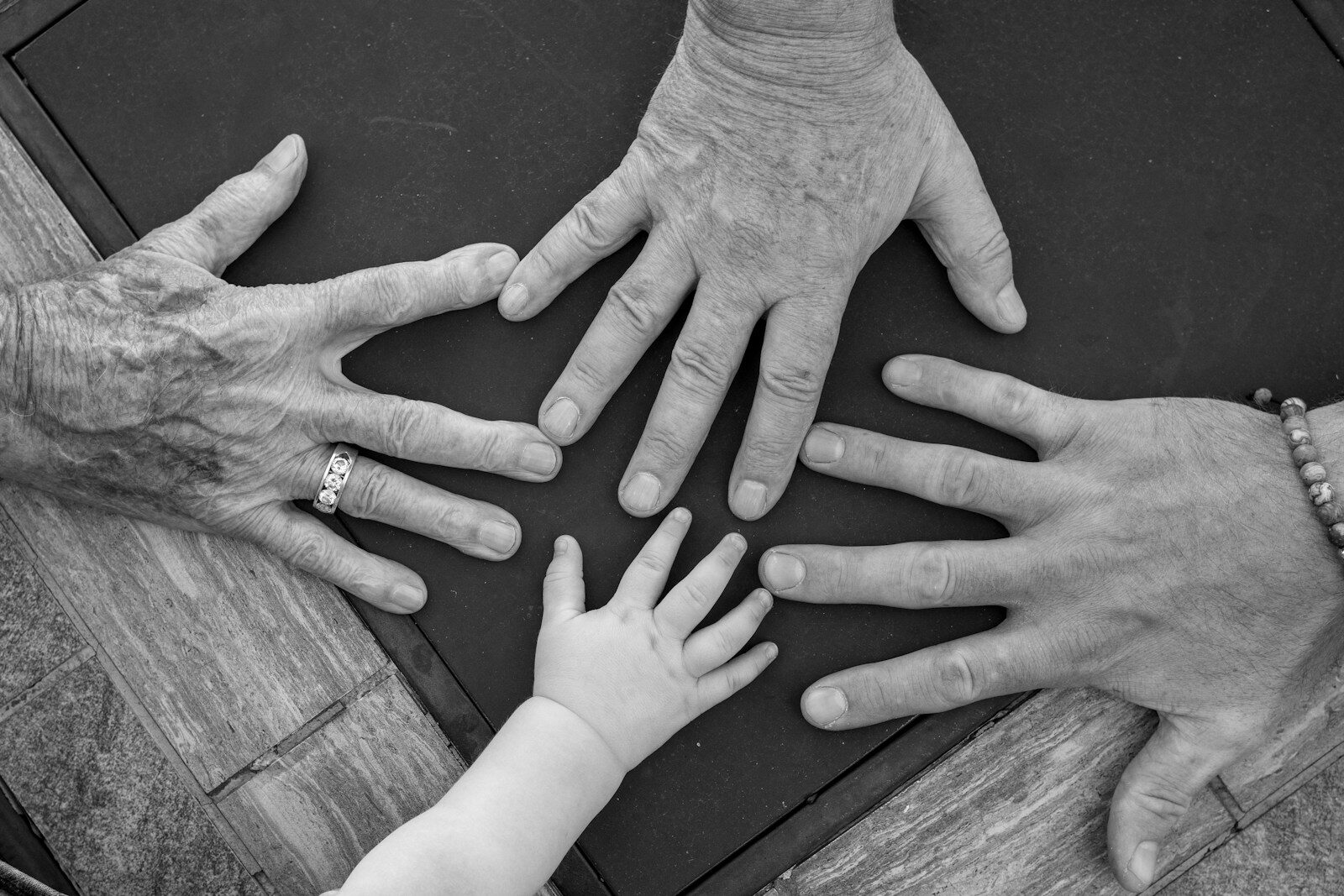
Based on Psalm 78:4 — “We will not hide them from their descendants; we will tell the next generation the praiseworthy deeds of the Lord, his power, and the wonders he has done.”
You are building a legacy right now.
Not when you have it all figured out. Not when the ministry is established and the platform is visible and the fruit is measurable and the story is tidy enough to tell without the uncomfortable parts. Right now. Today. In the ordinary, unglamorous, apparently unremarkable texture of your daily choices, your daily relationships, your daily orientation toward God or away from Him.
Legacy is not built in the highlight moments. It is built in the Tuesday moments — the ones nobody is watching, the ones that feel too small to matter, the ones that will only be recognized as significant years from now when someone who was paying attention looks back and traces the line from who they became to what they received from you.
Psalm 78 opens with one of the most intentional statements about generational legacy in all of Scripture. The psalmist is not talking about monuments or institutions or theological systems. He is talking about the faithful, consistent, generation-to-generation transmission of the story of what God has done — told honestly, told specifically, told with enough personal investment that the next generation receives not just information about God but a living inheritance of genuine encounter with Him.
That is the legacy God is most interested in. And you are building it whether you realize it or not.
The question is not whether you will leave a legacy. You will.
Every person leaves one. The question is what kind — whether it will be the legacy of a person who lived intentionally from the inside out, whose daily choices reflected genuine formation and genuine devotion, whose story carried the unmistakable thread of a God who was always already at work ahead of them.
Or the legacy of a person who meant well, who had genuine faith, but who allowed the urgent to perpetually crowd out the important — who never quite got around to the genuine formation, the genuine community, the genuine transmission of the living story to the people who were watching closest.
Frank Viola writes with characteristic directness about the generational dimension of the organic church vision: “The early church understood that the life of Christ was not a personal acquisition to be enjoyed privately. It was a living inheritance to be transmitted — from generation to generation, from community to community, through the faithful, consistent, personally invested presence of people who had been genuinely formed and who were genuinely willing to stay close enough to others to let the formation pass through them. Legacy, in the New Testament, is always relational. It is never institutional” (From Eternity to Here, p. 312, Frank Viola).
Legacy is always relational. Never institutional.
That is the kind of legacy the Lifechoicely framework is oriented toward producing — not an organization, not a platform, not a theological brand. A living transmission of the inside-out life from person to person, from generation to generation, in the context of genuine relationship and genuine formation.
My own legacy consciousness was shaped by a specific and unexpected source.
It was not a sermon about generational impact. It was not a leadership conference about building something that outlasts you. It was five years of watching Lois care for her dying father.
Day after day, month after month, year after year — she poured herself out in the most unglamorous, unrecognized, undocumented ministry imaginable. Changing bedding and preparing meals and sitting in the quiet of a room where conversation had become difficult and presence was the only language left. No platform. No audience. No ministry report.
And what she was building — though neither of us would have used the word at the time — was a legacy. A specific, visible, unmistakable demonstration to everyone who was watching — to me, to her family, to the friends who visited, to the Lk10 community who knew the story — of what it looks like to love someone at the cost of everything convenient, without any visible return, with the patient, cross-shaped faithfulness of a person who has genuinely surrendered her life to a God who wastes nothing.
That is a legacy. It does not appear in a ministry database. But it has been transmitted — into me, into our community, into this framework, into these words that you are reading right now.
Bob Hamp identifies what he calls “the formation legacy” as the most significant and most lasting thing one person can give another.
Not money. Not knowledge. Not opportunity. The formation legacy — the specific, personal, hard-won transformation that has happened in a person’s interior life through genuine encounter with God and genuine surrender to His process — transmitted through proximity, through relationship, through the honest telling of the story that includes both the victories and the failures.
“The most powerful thing you can give the people after you,” Hamp writes, “is not your accomplishments. It is your formation. The person you have become — through the suffering you surrendered, the lies you displaced, the identity you received, the God you genuinely encountered — that person is the legacy. And it is transmitted not through your platform but through your presence. Not through what you achieved but through who you became and how close you were willing to stay to the people who needed to receive it” (Think Differently, Live Differently, p. 421, Bob Hamp).
Who you became and how close you were willing to stay.
That is the legacy criterion that matters most. Not what you built. Who you were while you were building it. And who was close enough to receive what was being formed in you.
Graham Cooke describes legacy in terms of what he calls “the inheritance of encounter.”
The greatest thing the previous generation can give the next, he argues, is not a theological system or a ministry structure — it is the living, experiential, personally transmitted conviction that God is real, that He speaks, that He moves, that He is faithful in the dark and not just in the light, that the inside-out life is genuinely possible and genuinely worth everything it costs.
“When a generation tells its story honestly,” Cooke writes, “including the failures and the suffering and the long seasons of invisible formation — and tells it in the context of genuine relationship with the people who are coming behind — something passes from one person to another that cannot be transmitted any other way. Not information about God. The lived confidence that He is who He says He is. That is the inheritance that changes everything for the generation that receives it” (Radical Perceptions, p. 127, Graham Cooke).
The lived confidence that He is who He says He is.
That is what Psalm 78 is describing. Not theological propositions handed down through careful doctrinal transmission. The living, story-carried, personally invested declaration: We have tested Him. We have found Him faithful. In the dark and in the light, in the suffering and in the restoration, in the slow seasons and the sudden breakthroughs — He has been exactly who He said He would be. And we are telling you this not from a textbook but from our lives. Receive it. Build on it. Go further than we went.
John Eldredge frames legacy in terms of the unfinished story — the recognition that what God is building through any individual life is always larger than that individual life.
“Every genuinely transformed person,” he writes, “is a chapter in a story that began before them and will continue after them. The legacy they leave is not the conclusion of the story — it is the foundation of the next chapter. And the most faithful thing they can do is to live their chapter so fully, so honestly, so genuinely from the inside out, that the people who come after them have more to build on, more to receive, more of the living inheritance of genuine encounter with God than they themselves began with” (Epic, p. 141, John Eldredge).
More to build on than they themselves began with.
That is the generational vision of Lifechoicely. Not a platform. Not a brand. A living, growing, generation-to-generation transmission of the inside-out life — each person building on what they received, going further than the person before them, leaving more for the person after them, until the full stature of Christ is expressed in a community of people who have been genuinely, thoroughly, irreversibly formed from the inside out.
The legacy you are building right now — in your daily choices, your daily relationships, your daily orientation toward God — matters more than you currently know.
Someone is watching. Someone is receiving. Someone is being shaped by your presence, your story, your willingness to be real, your faithfulness in the unglamorous seasons, your honest telling of the God who has been faithful through everything.
Live accordingly. Not with the pressure of performance. With the quiet, settled, intentional awareness that your life is a transmission — and that what passes through you to the people closest to you is, in God’s economy, one of the most significant things happening anywhere in the world right now.
TAKEAWAY LESSON:
You are building a legacy whether you know it or not. The question is not whether you will leave one — you will. The question is what kind. Live your daily life with the intentional awareness that someone is receiving what you are transmitting — and that the most powerful legacy you can leave is not what you accomplished but who you became and how close you were willing to stay.
Legacy Reflection: Write answers to these three questions: What have I received from the generation before me — in faith, in formation, in the honest telling of God’s faithfulness? What am I currently transmitting to the people closest to me — through my presence, my story, my daily choices? And what do I want to be true of my legacy twenty years from now? Let those answers shape how you live this week.
— Ed Baulete Lifechoicely.com
More From This Category
Everything We Have Been Building Toward — A Summary, a Framework, and an Invitation to Go Deeper
Based on Colossians 1:27-28 — "Christ in you, the hope of glory. He is the one we proclaim, admonishing and teaching everyone with all wisdom, so...
A Final Word — To the Hungry Believer Who Is Still Saying “I Wanna Know More
Based on Matthew 5:6 — "Blessed are those who hunger and thirst for righteousness, for they will be filled." If you have read every article in...